

A New Form of Worship
Our word image is straight from Latin imago, meaning copy, imitation, phantom, appearance, idea. This concept of image as likeliness, in particular, has certain roots in Christianity, if we recall the Bible words “To þe ymage of god he made hym”–1 the interpretation of the creation of man in Genesis. Man is made in the image of his creator, while woman is created only from the former’s rib. Not only has the Christian creation myth gave foundation to a binary logic of identity, but also sought to maintain a monopoly over the visible and invisible: “In fact, the Christian revolution is the first and only monotheist doctrine to have made of the image the symbol of its power and the instrument of all its conquest. It convinced all the powers from East to West that the one who is the master of the visible is the master of the world and organises the control of the gaze”.2 Henceforth, people learnt, informed, tamed, and were educated through images.
Hans Belting (1990) draws a history of the image before the era of art when cult and sacred images were believed to be “of heavenly origins or produced by mechanical impressions”.3 The latter type of acheiropoetic image is considered by David Levi Strauss (2014) the progenitor of technical images, sharing with contemporary photographies what Walter Benjamin’s calls the technological “optical unconscious” (2008 [1935]), or what escapes from the human eye because of its limits, still revealing to the medium, not through structuring but unveiling.4 From sacred to technical images, our forms of worship have shifted towards flat, illuminating surfaces, inanimate bodies that long for our touch to merge with us in a hybrid form.
We still believe, as we did in the era before art, in what we see to the point that the virtual and the real are sometimes indistinguishable. The camera, with its mechanical eye, asserts our existence and identity, our being in the world as bodies among other forms. Aleksandra Szajnecka’s practice takes the premises from this relationship to technology and social media content and platforms, such as podcasts, Instagram, Twitter, YouTube, and private blogs, where she started finding esoteric rituals to get in touch with her spirituality during the first wave of the pandemic―a time where the self was felt by most people as the only sanctuary of thoughts.
Through the reappropriation of the same capitalist tools that reproduce women’s forms of dispossession and misogynist obstinacy through the accumulation and circulation of violent images, Szajnecka has constructed her own set of rituals and portals to the invisible; allowing the artist to explore her fascination with Catholic symbolism and simultaneously come through her fears of change and self-exploration, shifting from religious to pagan, magic domains, imaginaries, and beliefs:
“Creating a project has often been a conflict between my habits and my wishes. For example, taking a photo of my portrait on the altar felt upsetting to me. I discovered that this is a delicate topic to me―it suddenly turned out that I have a lot of boundaries inside me, which I’m afraid to cross for the fear of others’ feelings, and sometimes my own”.5

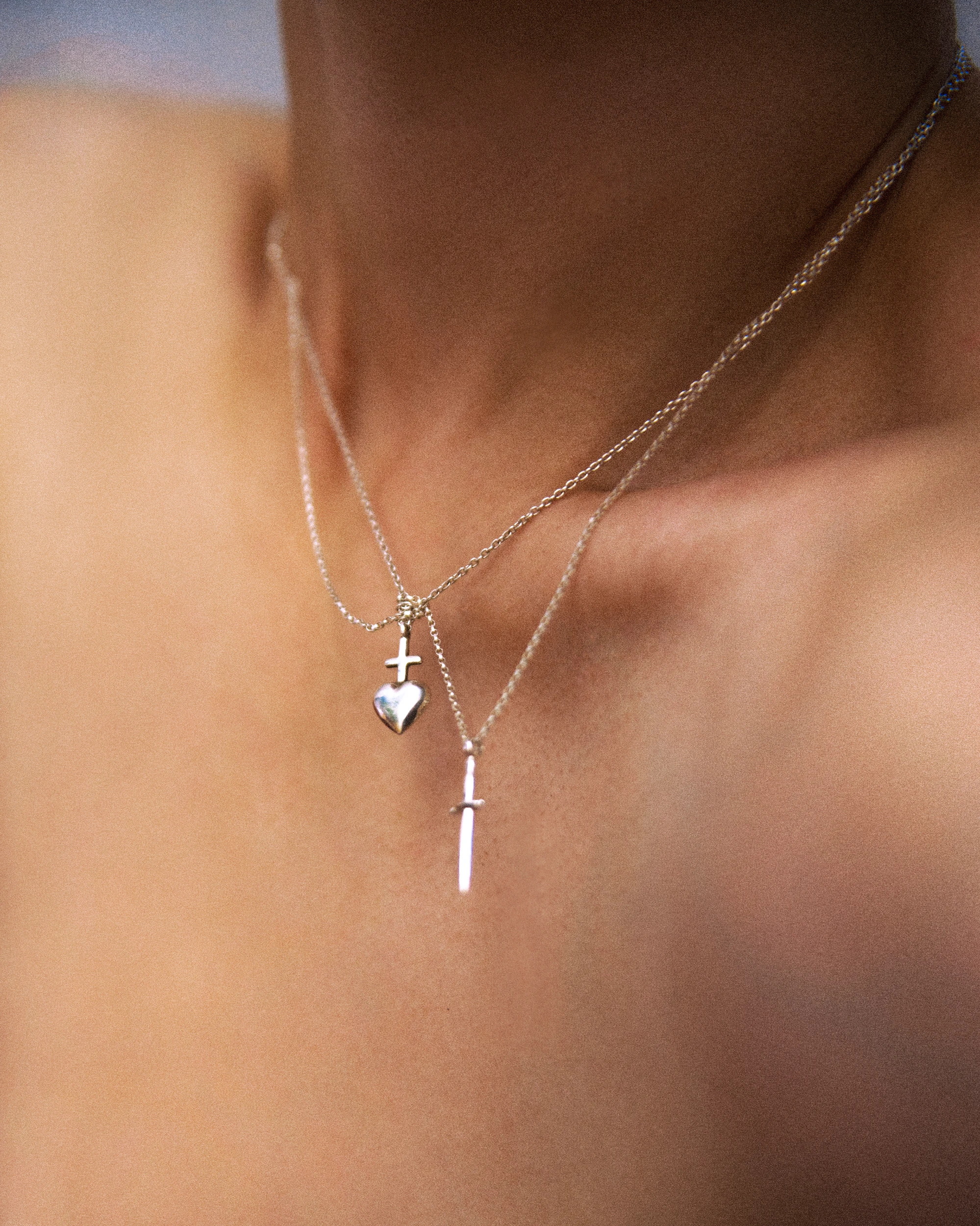
Scientists assert that we are only capable of seeing 4% of existing matter, while the remaining 96% is constituted by dark energy and dark matter.6 Szajnecka attempts to explore the unexplored, namely those dark energies that linger in our identities and yet have no forms by which to become visible. By examining nature and moon cycles and enacting esoteric rituals, Szajnecka seeks liberation through magic, an essence that it shares with photography. Whilst spiritist photography of the 19th Century attempted to capture ghosts and spiritual entities and showed a fascination for energies and unseeable matter, contemporary so-called post-
photographic movements investigate how far the medium can go in transferring mental images into material and touchable entities. Images precede our contact with reality. As inhabitants of a liquid dimension, they take form in human vision and in the media that circulate them.
Performing a metamorphic photographic practice, Szajnecka builds a set of her own rituals, playing between her current research
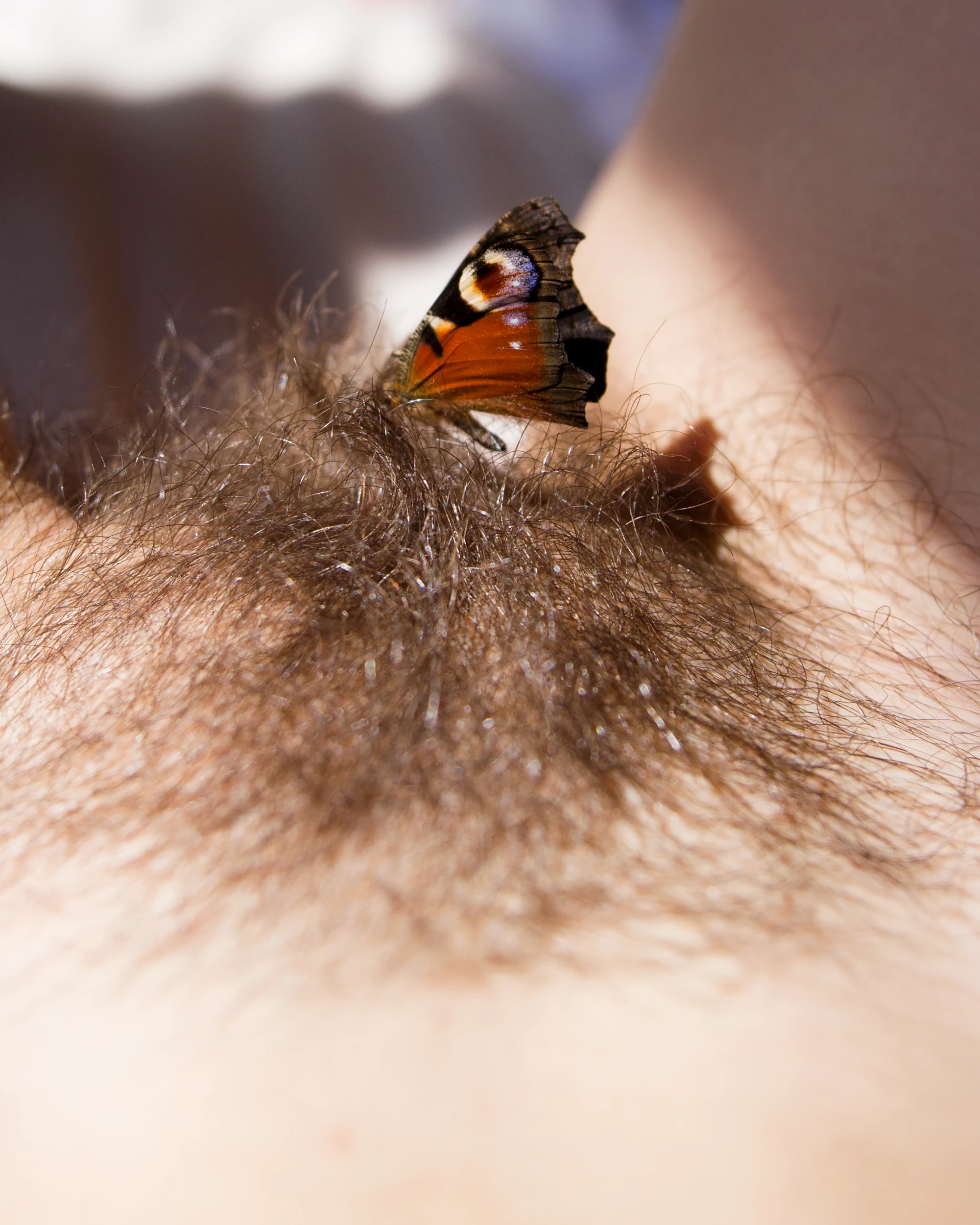
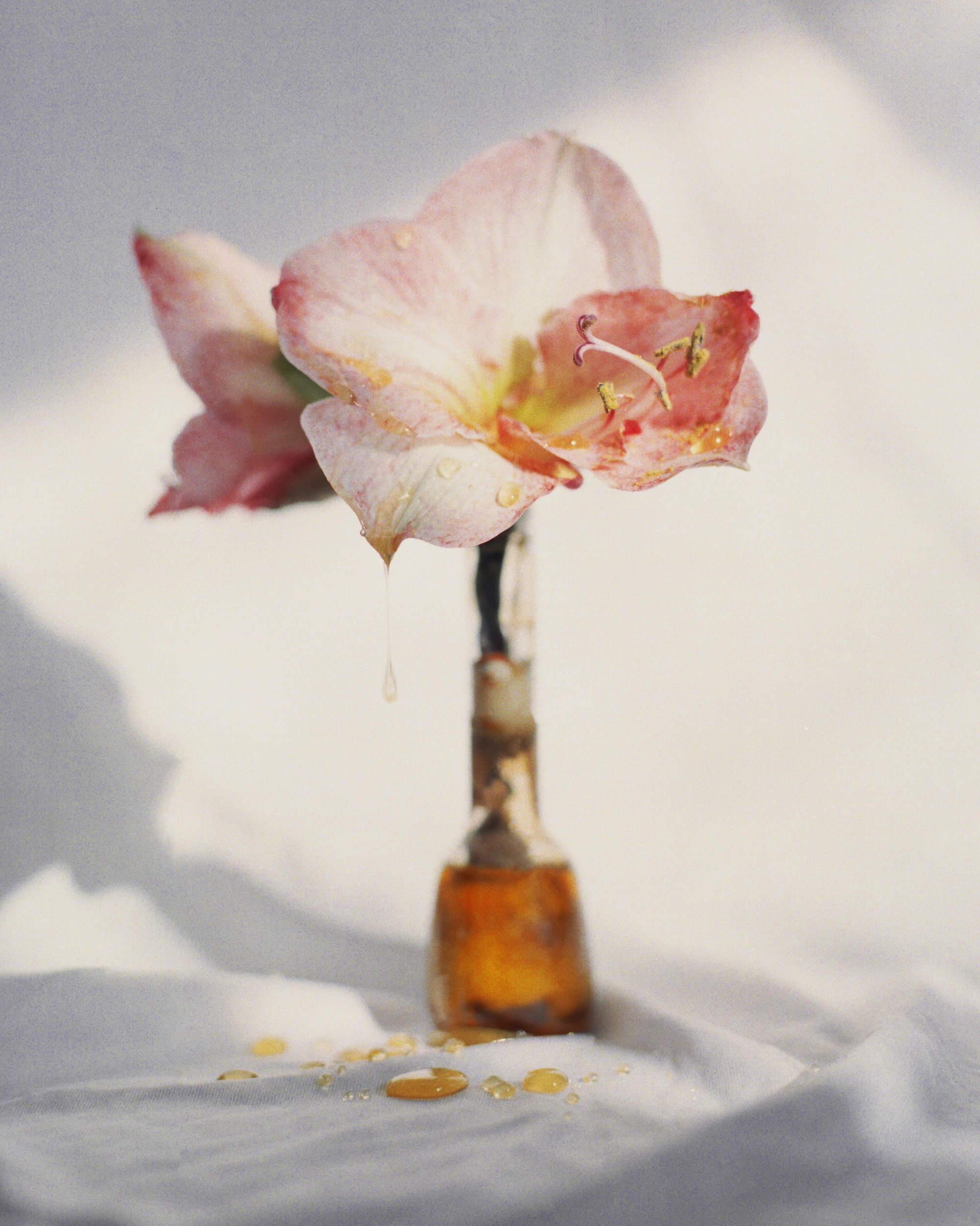
on witchcraft and rituals, and the stories and superstitions she heard from her mother in her childhood. The spiritual comes into play with reality, through nature and the artist’s body, through their merged and intermittent incompatibility. Baby Witch is thus a notebook of “a young person who is just starting their adventure with witchcraft, so they humbly accept tips and pieces of advice from the elder witches”.7 It is a record of theories and exercises for a deep reconnection to the self. It is the visual expression of her latent desires for growth and oneness with the invisible, somehow obscure world.
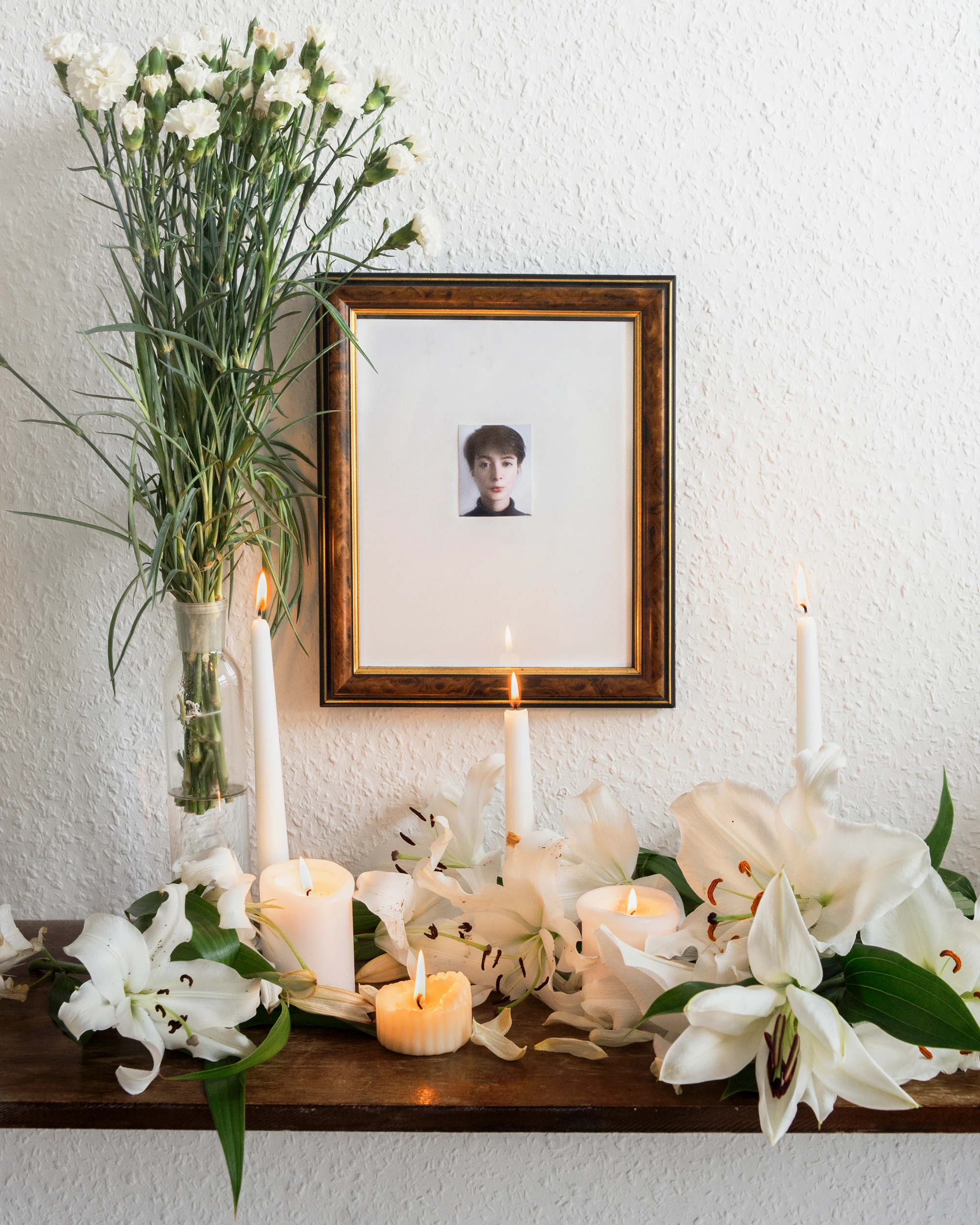
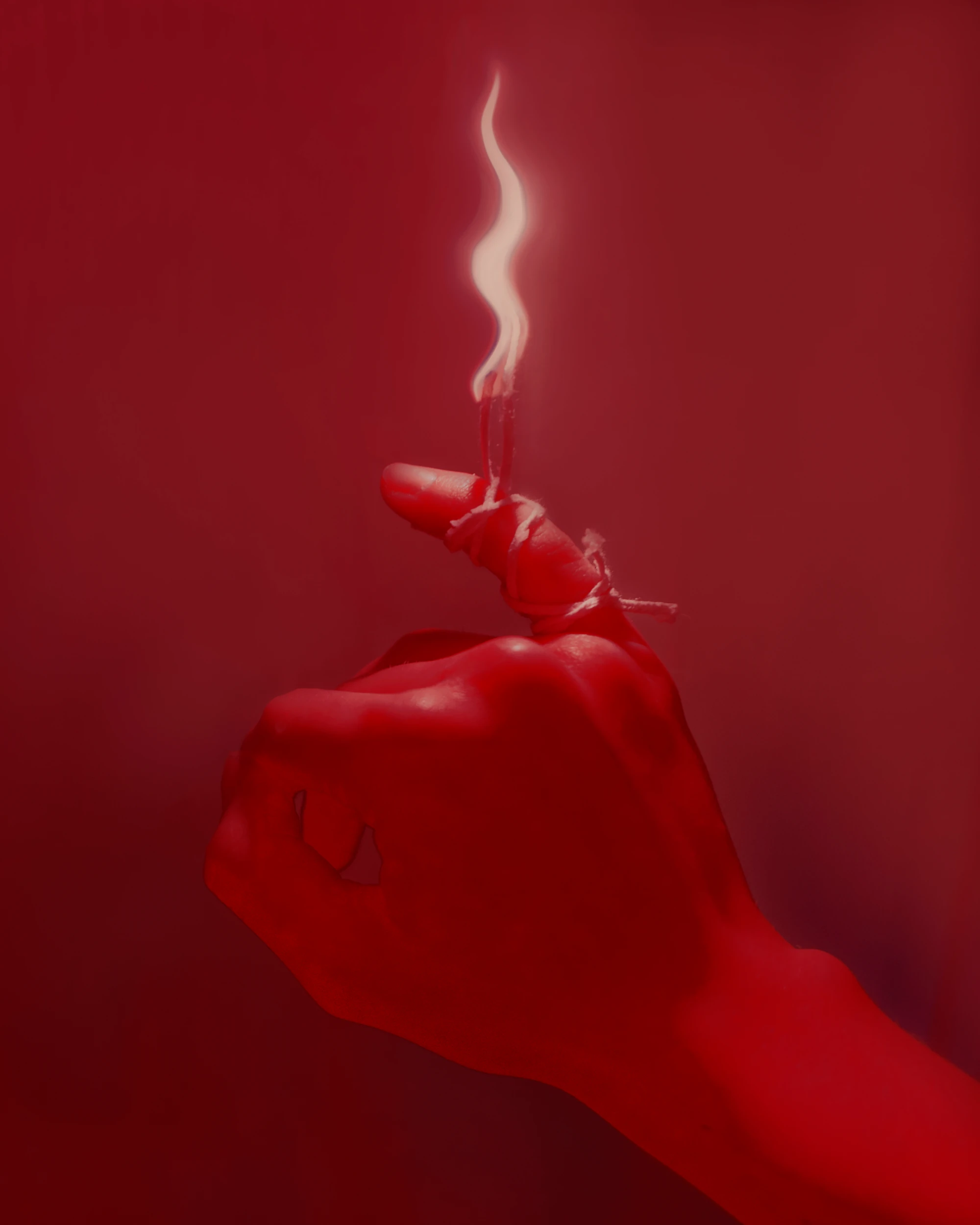
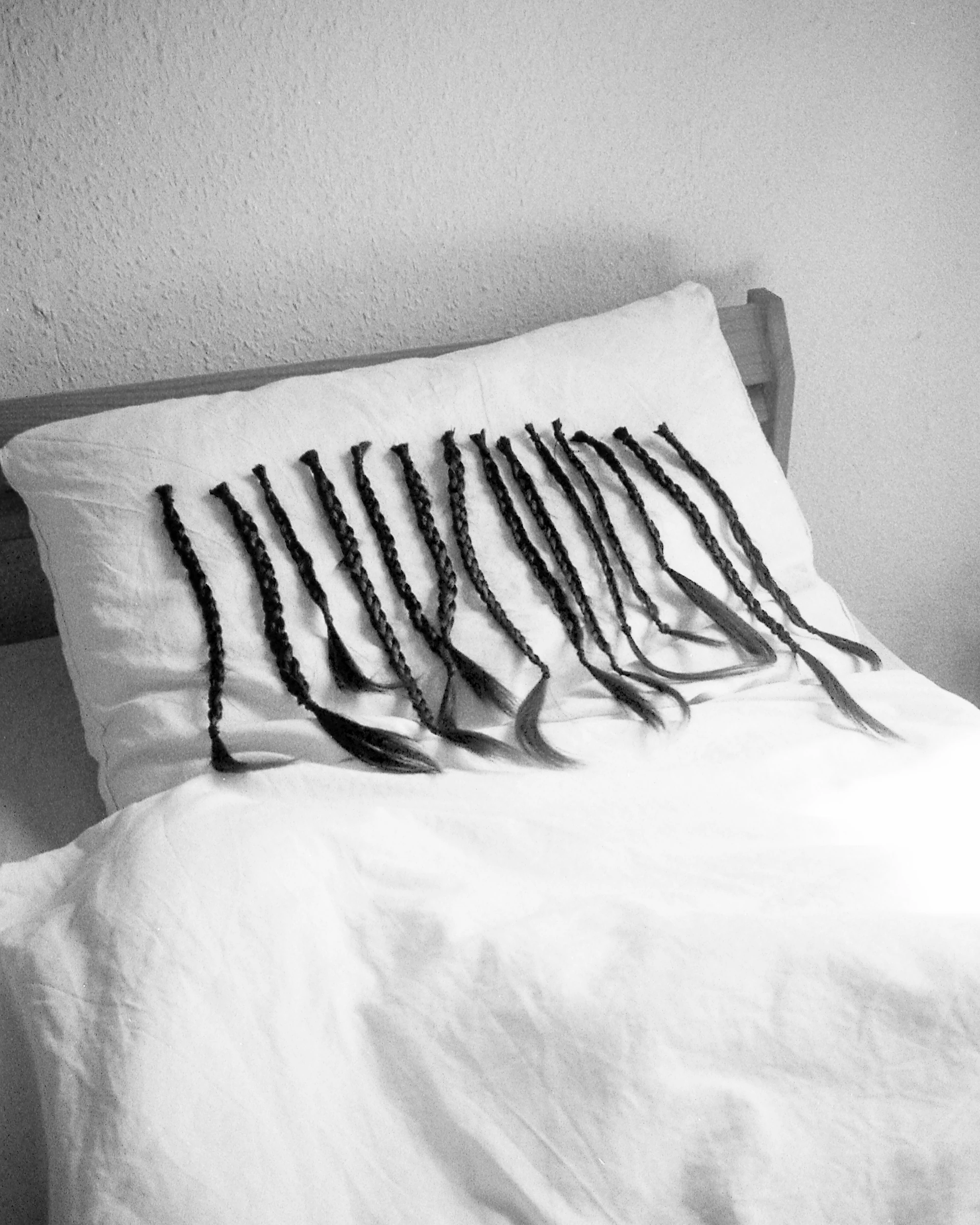
The digital representations of the artist and the world of rituals around her, builds up another layer of belief, one that is collectively rooted in the photographic image. It is a belief that has been shaped by the transition to the immaterial and inhuman technical production which society is relying on. Szajnecka’s images are thus meta-photos, photos that show what a photo is nowadays. Her images are not only representational of a body, an identity of belief, but also revelatory of the system underlying the medium itself. This system is made up of global flows and algorithms ruling over what we see and how we see, what we are brought to believe in
and consequently perform.
Contemporary photography is somehow stuck in its representational function but in works such as Szajnecka’s Baby Witch we find glimpses of what photography has been transforming into: “the exploration of labour practices that shape this world through mass-production, computation, self-replication, and pattern recognition”.8
Again, our forms of worship have shifted towards liquid images and the technological bodies they take shape into. Spirituality is cultivated in those algorithmic fluxes.
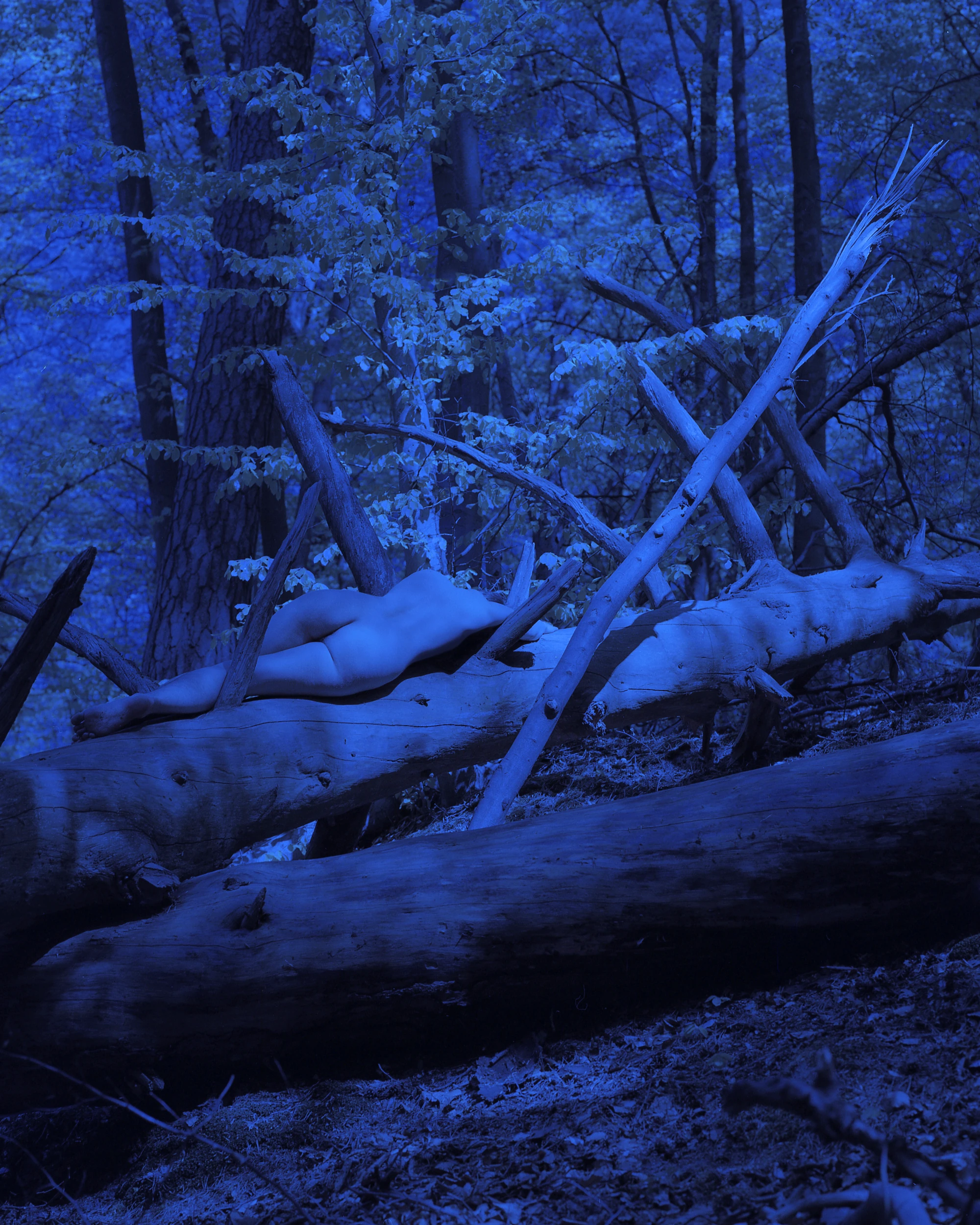
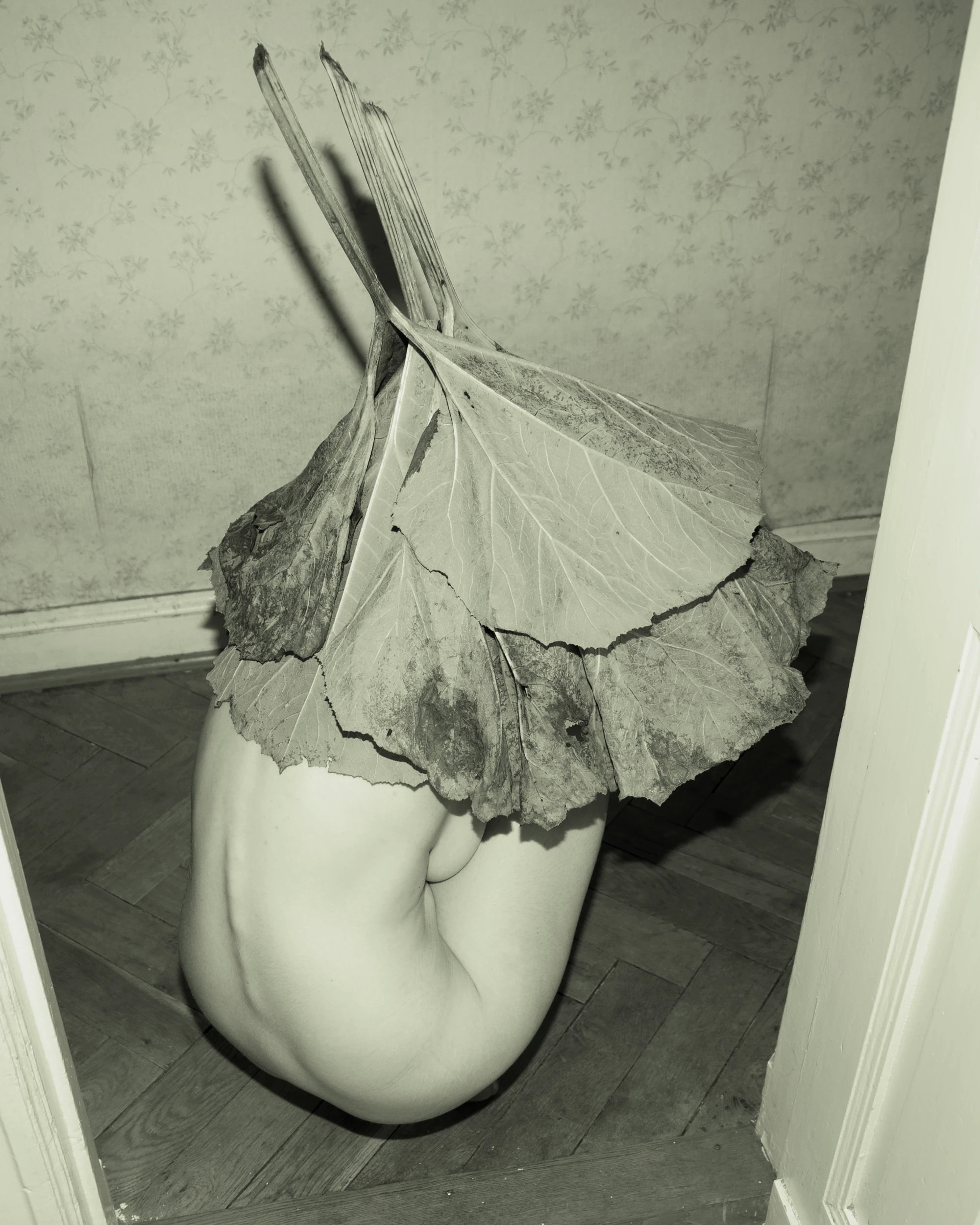
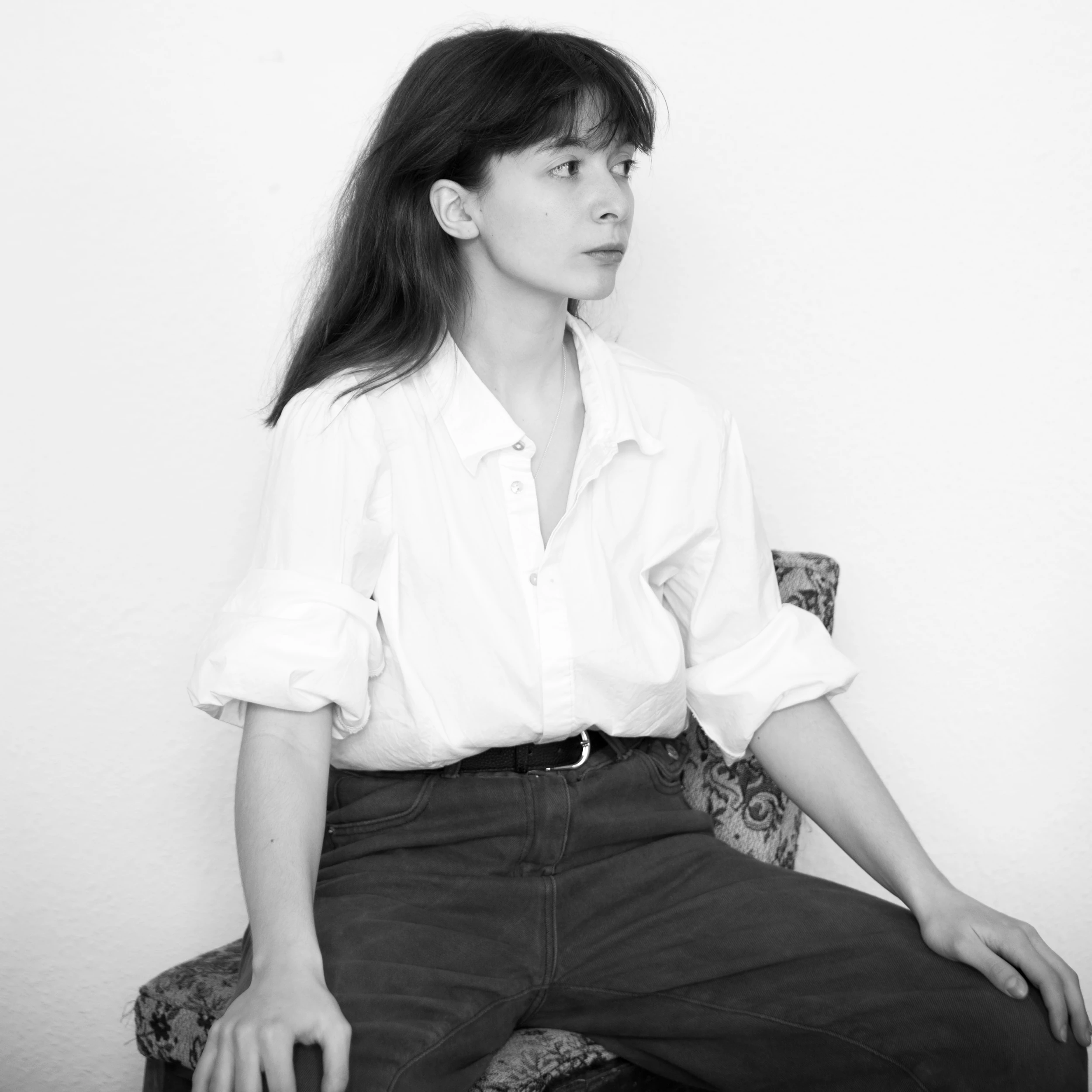
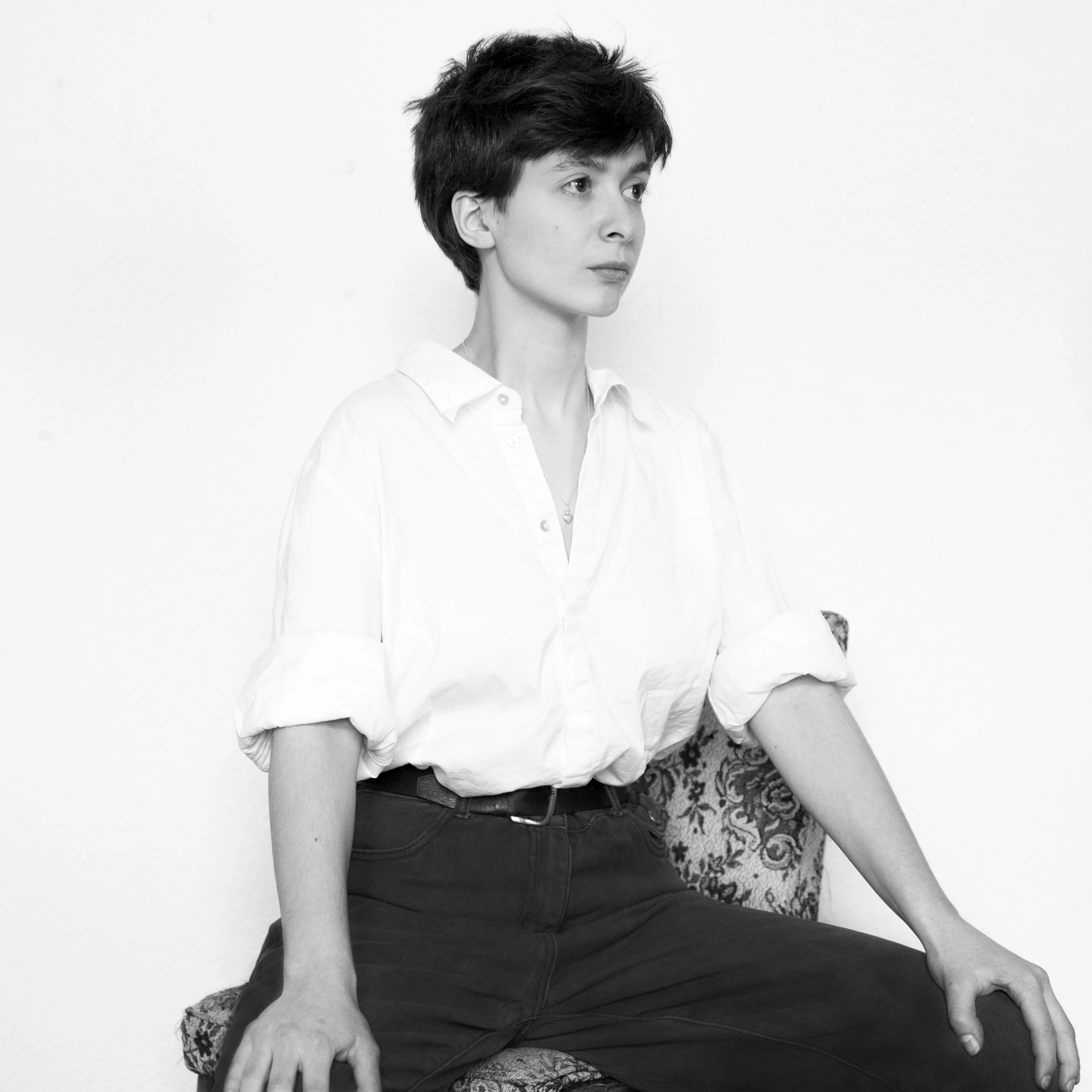
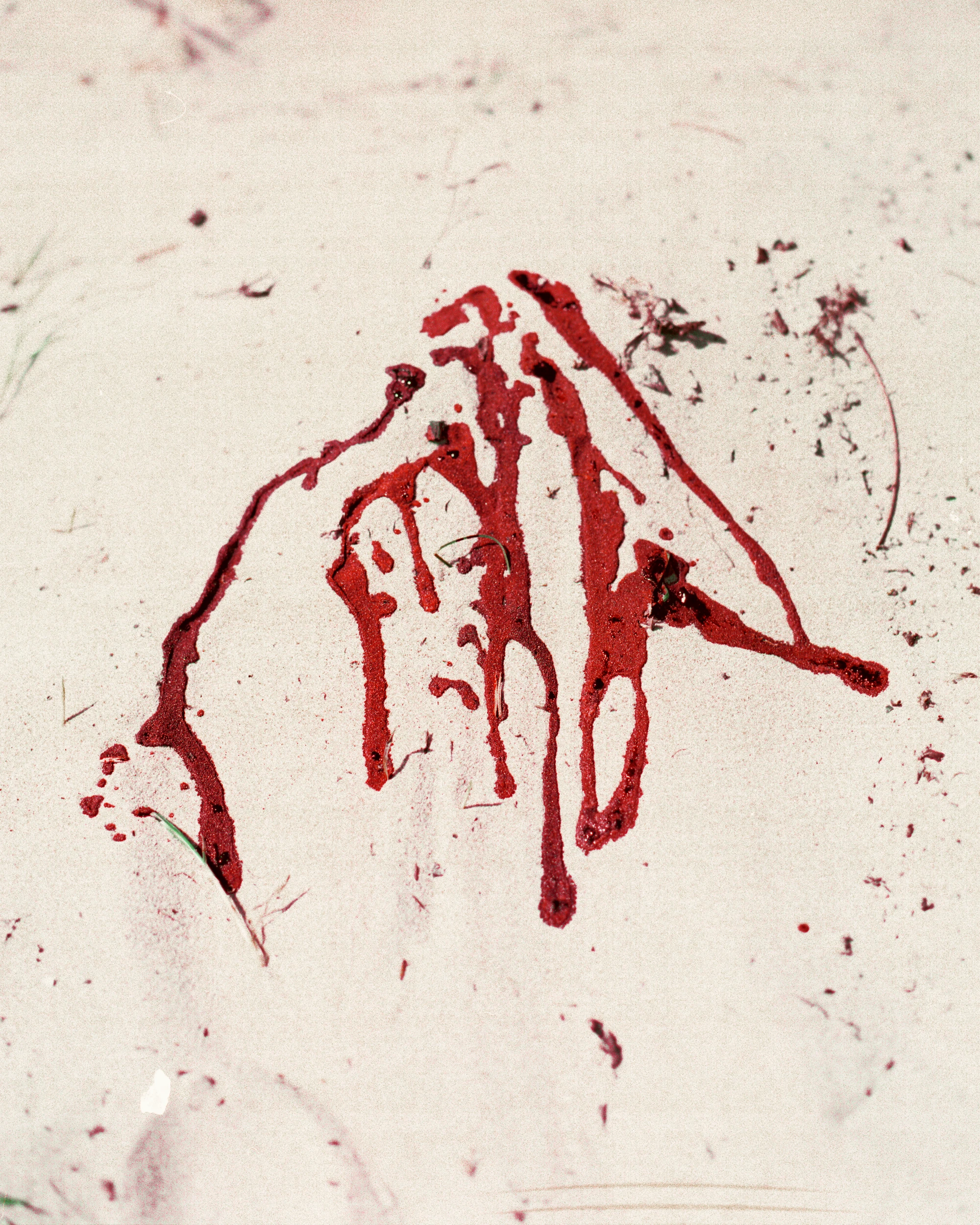
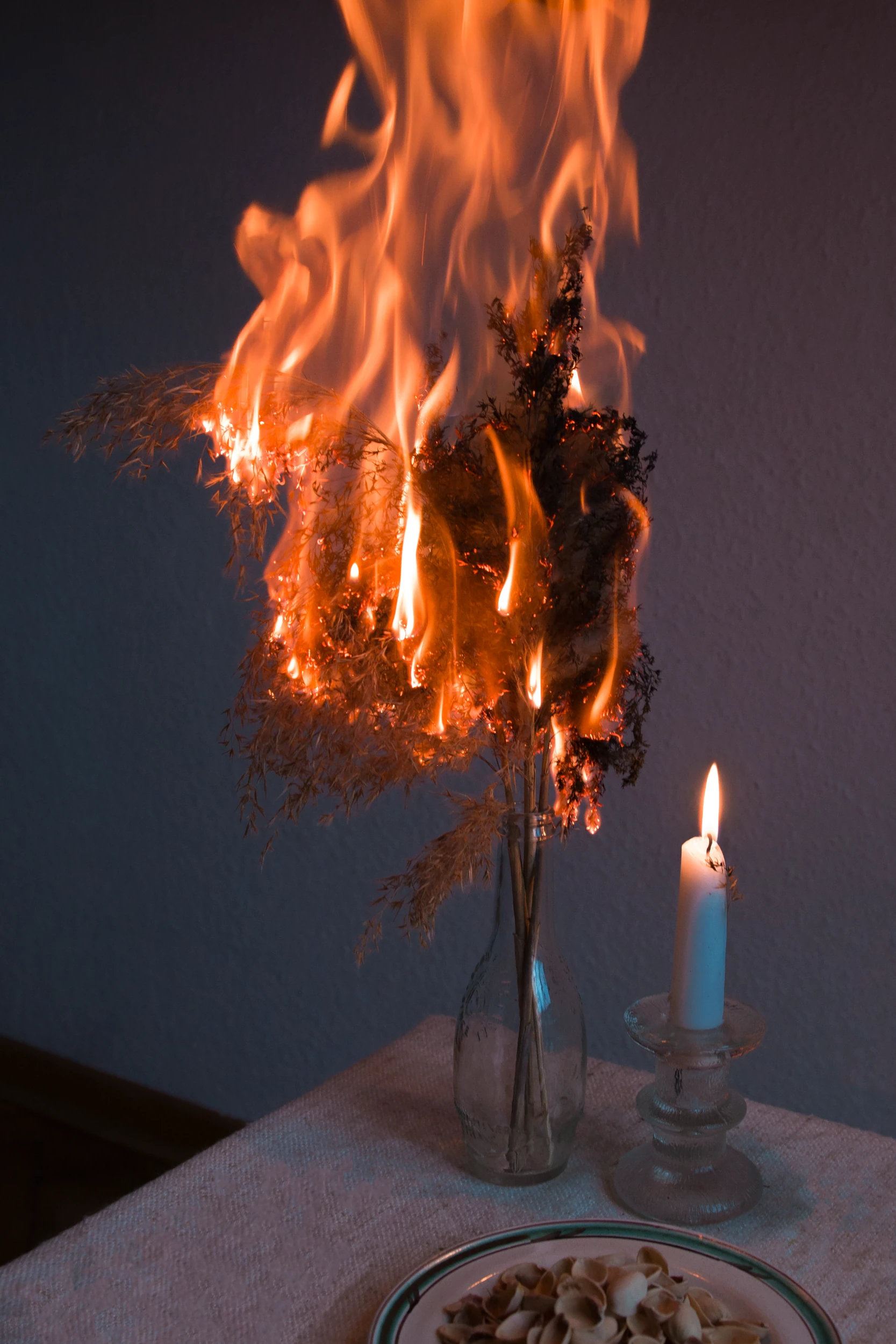
Image above by Aleksandra Szajnecka
1 Genesis I.27, Wycliffite Bible, early version, 1382.